When people hear that we’ve cut our household trash by more than half, the assumption is usually that we’re doing something extreme — making our own products, refusing all packaging, composting absolutely everything, or spending enormous amounts of time on trash-management systems. None of that is true.
The honest version is that we made a series of pretty manageable changes over about eighteen months, and the compounding effect of those changes was more dramatic than we expected. We went from two full kitchen trash bags a week to one every ten days or so, and our recycling bin is also substantially more empty because we’re bringing home less single-use packaging in the first place.
Here’s what actually moved the needle.
Step One: Figure Out What’s Actually in Your Trash
This sounds tedious, but it’s genuinely useful to spend one week looking at what you’re throwing away before you try to change anything. For most families, the trash is dominated by a few categories: food packaging (especially plastic), food waste (scraps and leftovers that didn’t get eaten), single-use items like paper towels and zip bags, and product packaging from deliveries and purchases.
When we did this exercise, we found that food scraps and food packaging were together probably sixty percent of our trash volume. That immediately told us where to put our energy. Your household might be different — if you have a lot of kids’ activity materials or hobby-related waste, those might be bigger categories for you. The point is to know before you start, because it makes the whole thing much more efficient.
Composting: The Single Biggest Win
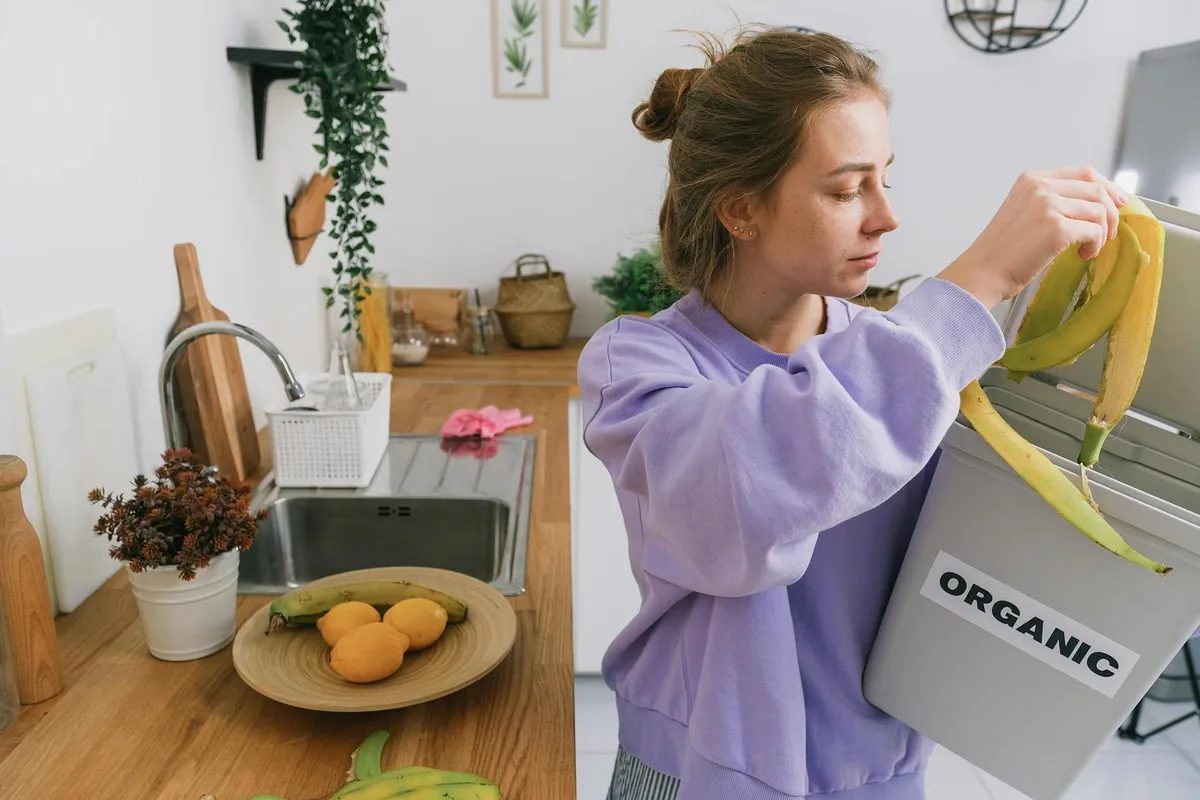
If you do one thing from this list, make it composting. Starting a compost system had a larger impact on our trash volume than every other change combined. Food scraps are heavy, they take up a lot of space, and they’re also the thing that makes the rest of your trash smell, which means you feel like you have to take the trash out before the bag is even full.
We started with a simple outdoor compost bin from the hardware store — the black tumbler style that sits on legs. We keep a small ceramic bin on the kitchen counter for collecting scraps through the day, and we empty it into the outdoor bin every two to three days. That’s it. No complicated systems, no turning schedules, no worrying too much about the carbon-to-nitrogen ratio (within reason — just don’t put in a ton of only one thing).
What you can compost: fruit and vegetable scraps, coffee grounds and filters, tea bags (remove any plastic tags), eggshells, bread, grains, cardboard torn into small pieces, paper. What you shouldn’t compost in a basic backyard bin: meat, dairy, oily foods, anything with a lot of salt. If you want to compost those things too, a bokashi system handles them, but we haven’t felt the need to add that complexity.
Rethinking Paper Towels
Paper towels were a genuinely significant part of our trash. We used to go through a roll every week or so, and those rolls accumulate fast. We switched to a basket of “unpaper towels” — which is a fancy way of saying old cut-up t-shirts and flannel shirts that we keep folded next to the sink. They work for everything paper towels work for except truly disgusting cleanup jobs (we keep a small roll around for those).
The key to making this habit stick: keep them accessible and make washing them frictionless. We have a small bin in the cabinet under the sink where used ones go, and they get washed with kitchen towels every few days. After about three weeks, reaching for a cloth instead of a paper towel just became automatic.
Buying Smarter at the Grocery Store
A lot of household trash comes in the front door with your groceries. Some packaging is unavoidable, but a lot of it isn’t — you just have to build a few new habits.
The biggest wins for us: buying from the bulk bins when possible (oats, nuts, dried beans, rice, pasta — all of these are available in bulk at most natural grocery stores and most co-ops), choosing products in cardboard or glass over plastic when the price difference is reasonable, and buying larger formats to reduce packaging per unit (one large container of yogurt generates less packaging than four individual ones).
We also started planning meals a bit more deliberately, which turned out to be about food waste as much as anything. We were throwing away a surprising amount of produce that we bought with good intentions and then didn’t get around to using. Making a loose meal plan at the start of the week reduced both our food waste and our grocery spending — genuinely one of those rare things that’s better in every direction.
Dealing With the Packaging You Can’t Avoid
Here’s a real talk moment: you’re not going to eliminate all packaging from your life, especially with kids. Snack packaging, birthday party supplies, activity materials — it’s going to exist. The move isn’t to stress about every piece of packaging; it’s to get good at dealing with the packaging you do have.
A few things that helped us: learning which plastics your local recycling program actually accepts (it’s usually not as many as people think, and putting non-recyclable plastic in the recycling bin just contaminates the load), using the TerraCycle program for hard-to-recycle items like chip bags and snack wrappers (we have a collection box in our mudroom), and choosing products from companies that offer take-back programs for their packaging.
The Kids’ Role in All of This
Our kids are now seven and nine, and they’re actually pretty enthusiastic participants in our low-waste systems — mostly because we made it normal from early on rather than suddenly announcing a new regime. The seven-year-old is in charge of taking kitchen scraps to the compost bin and considers this a responsibility, not a chore. The nine-year-old sorts recycling without being asked.
What we didn’t do, and this matters: we didn’t make our kids feel guilty about trash or turn every packaging encounter into a lesson. Kids internalize shame, and we didn’t want them growing up anxious about environmental stuff. We modeled the behavior, made it routine, and let them pick it up naturally. It worked better than the lecture approach would have.
What We Haven’t Done
Because honesty is the whole point here: we still buy plastic sometimes. We still generate some trash every week. We haven’t gone zero-waste, and we’re not trying to. What we’ve done is make a meaningful dent in our footprint with changes that fit into real life, and we’ve kept those changes going for over a year now, which tells us they actually work.
The goal was never perfection — it was improvement. And by that measure, we’re pretty happy with where we landed.