I want to be upfront with you: I almost quit cloth diapers at the six-week mark. The laundry was more than I expected, my kid had a rash that sent me into a spiral of internet research, and someone at a mom group told me that my detergent was "stripping" the diapers in a way I didn’t fully understand. I was exhausted, the diapers smelled weird, and disposables were right there at the store, looking very easy and uncomplicated.
I didn’t quit, mostly because I’d already spent several hundred dollars on a stash and felt too stubborn to walk away. But here’s the thing: the problems I hit at six weeks were almost entirely fixable, and now, two kids later, cloth diapering is genuinely not that hard. It just took getting over the learning curve that nobody adequately warned me about.
So this is the honest guide I wish I’d had.
Why Cloth Diapers Are Actually Worth Considering
Before we get into the hard parts, let’s talk about why you might want to do this in the first place, because if the “why” isn’t solid, the learning curve is going to feel a lot worse than it needs to.
The environmental case is real but more nuanced than you’ve probably heard. Disposable diapers are a genuinely significant source of landfill waste — estimates vary, but a single child goes through somewhere between 4,000 and 6,000 diapers before potty training, and virtually none of them degrade in any meaningful timeframe in a landfill. Cloth diapers have their own environmental footprint (water, energy, detergent), but multiple life-cycle analyses find that cloth, used efficiently, comes out ahead.
The money case is also real, and it’s easier to calculate. A solid cloth diaper stash runs $300–$500 to buy new, or considerably less if you buy secondhand (which is totally fine and what most experienced cloth diapering parents recommend for your first stash). Over the diapering years, that compares to $2,000–$3,000 on disposables for most families. If you use the same stash for a second kid, the savings are even more significant.
The Types That Actually Make Sense for Beginners
Here’s where a lot of beginners get overwhelmed, because there are a genuinely bewildering number of cloth diaper styles. I’m going to simplify this significantly.
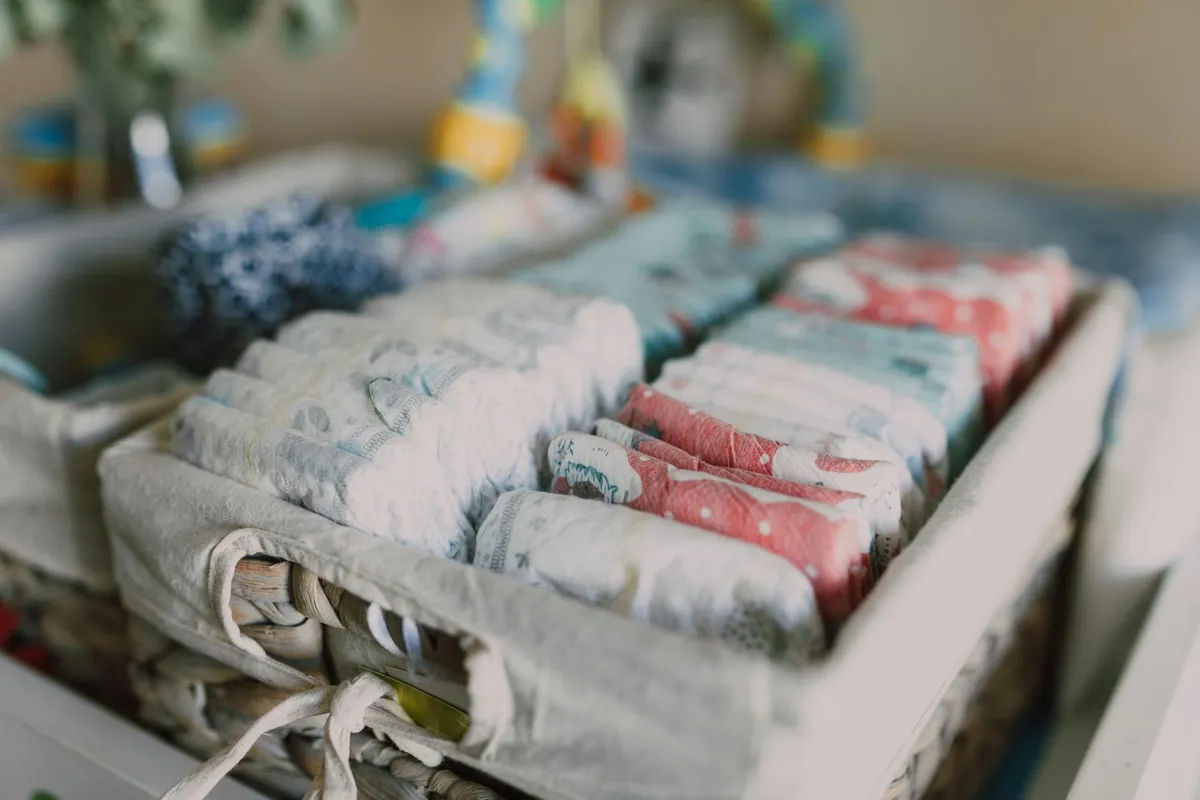
For most parents starting out, I recommend one of two options. Pocket diapers are the most user-friendly: they have a waterproof outer shell with a pocket that you stuff with an absorbent insert. They go on like a disposable, they’re adjustable to fit from newborn through toddler on most brands, and they’re what most people picture when they think of modern cloth diapers. Brands like Nora’s Nursery or Alvababy are affordable starting points.
All-in-ones (AIOs) are even simpler — everything is sewn together, no stuffing required — but they’re more expensive and take longer to dry. If ease of use is your top priority and budget is less of a concern, these are great. Thirsties and GroVia make reliably good ones.
What I’d avoid starting out: prefolds and covers (a learning curve plus extra steps), fitteds (expensive and require a separate cover), and anything with overly complicated snapping systems. Keep it simple until you know what you like.
The Laundry Situation, Honestly
This is the part that most cloth diaper guides undersell, so let me be direct. You will be doing more laundry. How much more depends on how many diapers you have in your stash and how often you wash, but for us with a newborn, it was every two to three days. That’s a load of diapers (just the diapers, not mixed with other laundry) every couple of days on top of your regular laundry.
The wash routine matters more than most things. The general advice that has worked well for us: a cold rinse first, then a hot wash with the recommended amount of detergent (not a cloth-diaper-specific detergent — any mainstream detergent without fabric softener works; we use Tide Free & Gentle), then an extra rinse. Dry the shells on low or hang them; the inserts can go in the dryer on medium.
The weird smell problem I hit early on was almost certainly from using too little detergent. The cloth diaper community has a complicated relationship with detergent amounts, and you’ll find a lot of advice about "buildup" that can make you under-detergent your diapers into a situation where they smell like ammonia after one wearing. Use the normal amount for your load size. Problem solved.
Rashes: What Actually Causes Them
Cloth diaper rashes are usually one of a few things, and none of them are a sign that cloth diapers are wrong for your baby. The most common culprits are: not changing frequently enough (cloth diapers need more frequent changes than disposables, roughly every two hours for infants), a detergent sensitivity (easily fixed by switching), or a yeast rash that needs treatment regardless of what kind of diaper you’re using.
What you want to avoid is zinc-oxide-based diaper cream (like Desitin) directly on cloth diapers — it coats the fibers and reduces absorbency. Use a cloth-diaper-safe liner if you need to apply cream, or switch to a cream that’s safe for cloth, like CJ’s BUTTer or coconut oil for everyday use.
Nighttime and Out-and-About
Two scenarios that require a bit of extra thought: nighttime, when you need more absorbency, and being out of the house, when you need to deal with dirty diapers on the go.
For nights, you usually need to boost absorbency. An extra insert or a hemp insert (hemp is more absorbent than microfiber) inside a pocket diaper usually gets you through a night without a change. Some parents use a fitted diaper with a wool cover for nights — wool is naturally water-resistant and breathable — but that’s an extra learning curve for later.
For out of the house, a wet bag is your best friend. A wet bag is a waterproof zippered pouch that holds dirty diapers until you get home — they seal in smell surprisingly well and they wash with the diapers. Keep a small one in your diaper bag and a large one at home for between washes. After this becomes habit, it’s genuinely not more complicated than carrying a disposable diaper home in a bag.
If I Were Starting Over Tomorrow
I’d buy a small trial stash of six to eight diapers before committing to a full stash — maybe a mix of two or three brands to see what works with your baby’s body shape. I’d join a cloth diaper Facebook group or subreddit because the community is genuinely helpful and will answer your weird smell questions without judgment. And I’d set a realistic expectation: there’s a one-month learning curve, and after that, it gets easy. The families who quit usually do it in that first month. Stick with it past that point and you’ll probably wonder why you ever considered stopping.